 Admin
Admin 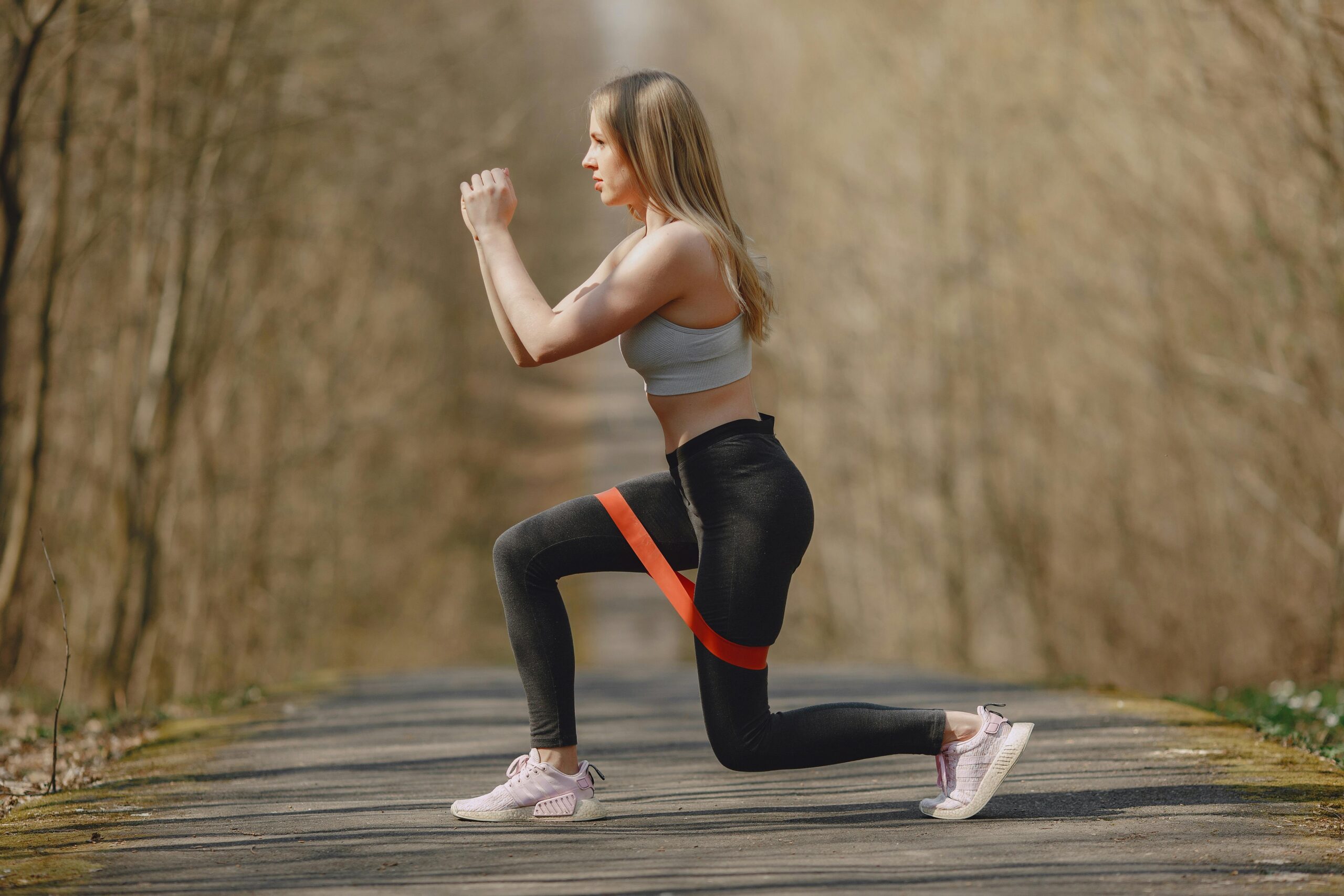
The elastic bands They are practical, light and versatile tools for training in any space. They are ideal for those looking for efficiency and comfort.
These rubber bands offer progressive resistancemeaning that the effort increases the more the band is stretched. This allows you to work on strength without the need for weights.
In addition, they adapt to all physical levels. Beginners or advanced people can benefit from including them in their training plan.
Benefits of elastic bands in your routine
1. They provide progressive resistance
The greatest value of elastic bands is the progressive resistance that they offer. This allows for constant muscle stimulation without impact on the joints.
This type of resistance promotes muscle strengthening and improves movement control in each repetition.
2. They are an economic routine
Train with elastic bands requires little investment. They are affordable, portable and durable. This makes band training a economic routine and functional.
Unlike machines or weights, they do not take up space or require special installations.
3. They improve muscle mobility
The elastic bands They are ideal for working muscle mobility. They allow broad and controlled movements in different planes.
This improves flexibility, coordination and joint stability, key to preventing injuries and increasing performance.
What types of elastic bands exist?
Circular bands or mini bands
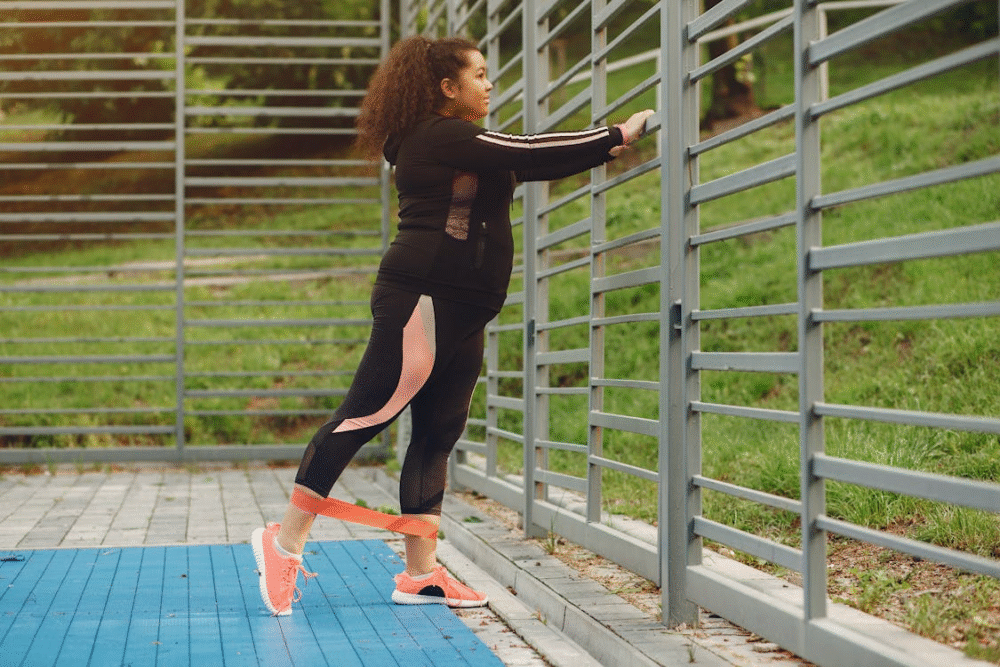
They are small and closed. They are mainly used to activate glutes, legs and shoulders. Perfect for low intensity exercises.
Long bands with handles
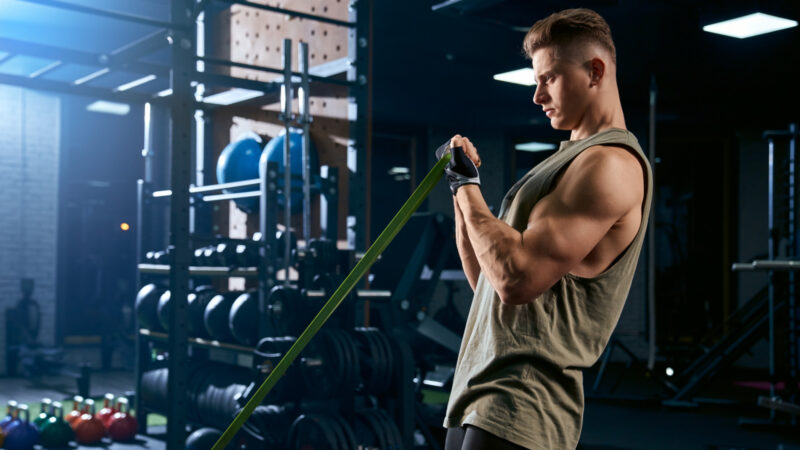
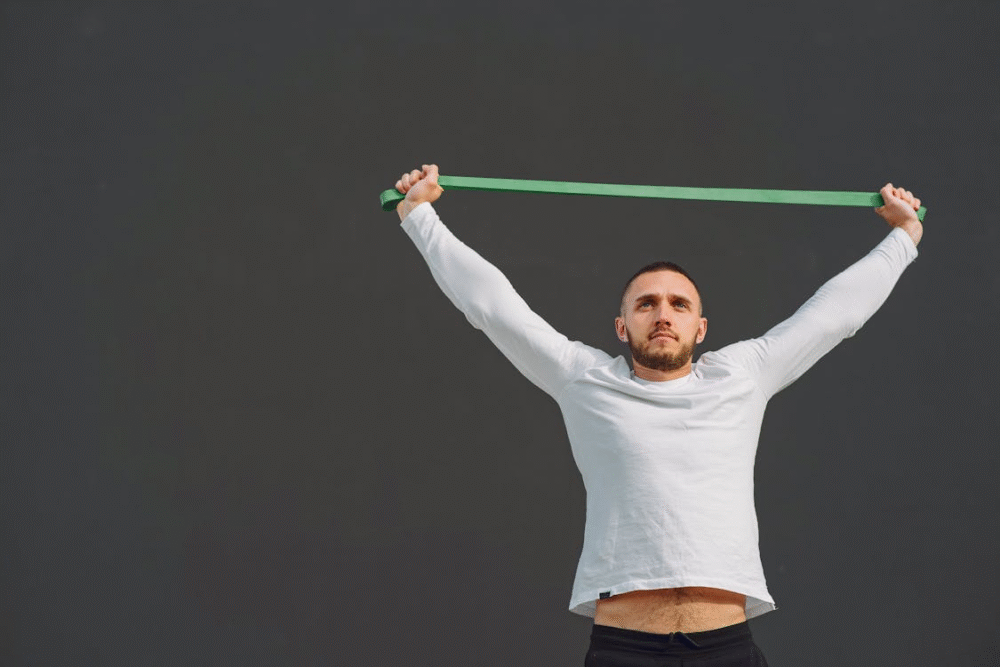
They offer more versatility. They are used to simulate gym movements, such as rowing, bicep curls or shoulder presses.
Flat latex bands
They are ideal for therapeutic work or stretching. They are also used for yoga or Pilates exercises.
How to start training with elastic bands?
Choose the right resistance
Each band color represents a different level of progressive resistance. Start with a medium intensity and increase as you progress.
Warm up before training
Prepare your body with joint mobility and gentle activations. This prevents injuries and improves performance with elastic bands.
Control movement
The key to working with elastic bands It is in slow and controlled execution. This way the target muscle is better activated.
Exercises with elastic bands for the whole body
Lower body
Mini band squats
Place the band above your knees. Perform squats while maintaining tension to activate your glutes and legs.
hip abductions
Lying on your side, lift one leg, keeping the band under tension. Improves the muscle mobility and strengthens the gluteus medius.
Upper body
Rowing with band
Step on the center of the band. Pull back with both arms. This movement strengthens the back and improves posture.
Shoulder press
Hold the band from the ground. Push up until your arms are fully extended. Train deltoids and improve muscle mobility.
Middle zone (core)
torso twist
Anchor the band to a fixed point. Hold with both hands and rotate your torso, maintaining tension. Improves strength and abdominal stability.
Belt shift iron
Place a band on your wrists. Do a plank and move your hands laterally without losing tension.
Routine with elastic bands in 20 minutes
A simple proposal to work the whole body from home or wherever you want. Perform each exercise for 45 seconds, rest 15.
- Band squats
- Rowing with band
- hip abduction
- Shoulder press
- Plank with displacement
- Biceps Curl
- Band Lunges
- torso twist
Complete two rounds. If you want more intensity, switch to a band with higher progressive resistance.
Tips for better results
Train regularly
The key to any training is consistency. The elastic bands They allow you to create a simple and sustainable routine.
Control your breathing
Inhale as you relax and exhale as you exert force. This improves muscle activation and coordination in each movement.
progressively increases
As your body adapts, switch to harder bands or add reps. This way you will maintain the necessary stimulus to progress.
Do elastic bands replace weights?
Not completely. However, they are an excellent alternative or complement. They offer progressive resistance and greater freedom of movement.
They are ideal for people with lack of timefor those who are starting out in training or looking to avoid injuries.
In addition, they help work deep muscles that are sometimes not activated with conventional machines.
Who are elastic bands recommended for?
- Beginners
- Those who want a economic routine
- Older adults
- Athletes in the recovery process
- Athletes seeking to improve muscle mobility
They are also a useful tool in warm-up or activation sessions before a main workout.
The elastic bands They are a practical, economical and effective solution to train with comfort and results. They offer progressive resistanceadaptability and efficiency.
With them you can improve your strength, posture and muscle mobility without the need for expensive equipment. You just need consistency and good technique.
Start with the basics and increase the difficulty over time. Your body will notice the difference. The important thing is to move, and elastic bands they make it easier for you.